
Keeping bugs away while enjoying outdoor meals and gatherings can be challenging. With the right strategies, you can minimize flying insects in your space and focus on the fun. From food covers and fans to natural repellents and insect traps, here are some practical ways to keep your dining table bug-free.

1. Food Covers
There's nothing like a fly landing in your potato salad to put a damper on a well-planned BBQ! Mesh food covers (also called "food tents" or "food domes") are an essential part of my outdoor entertaining tools. These breathable, tightly woven covers let air circulate while keeping pests out.
The most common food tents you'll find are fabric mesh pop-up covers {affiliate link}. They open like little umbrellas and sit flush with the table, easily covering plates or platters. They're lightweight for guests to lift and replace and collapse for quick storage. Plus, they come in different sizes to cover everything from small bowls to large serving platters.
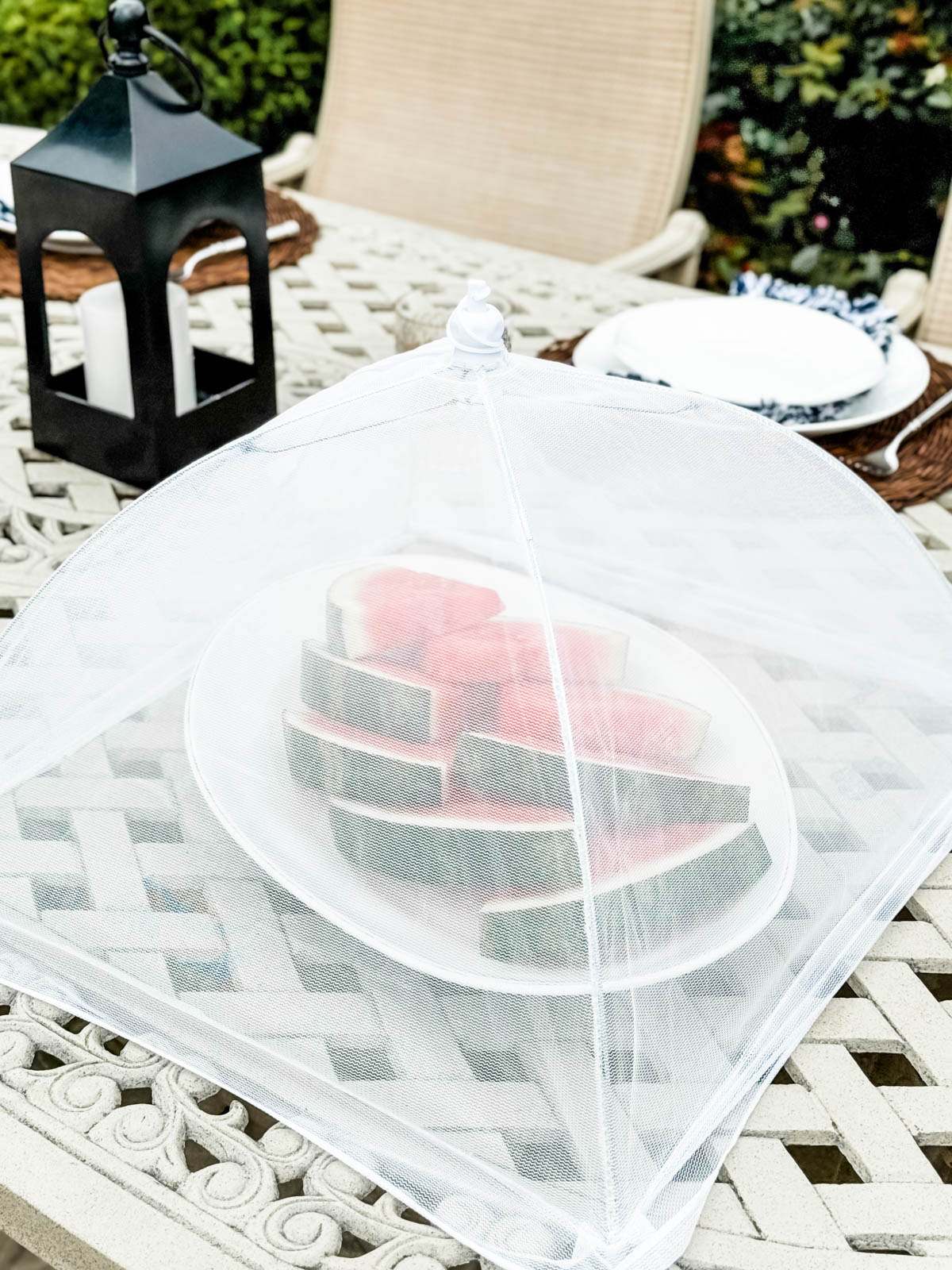
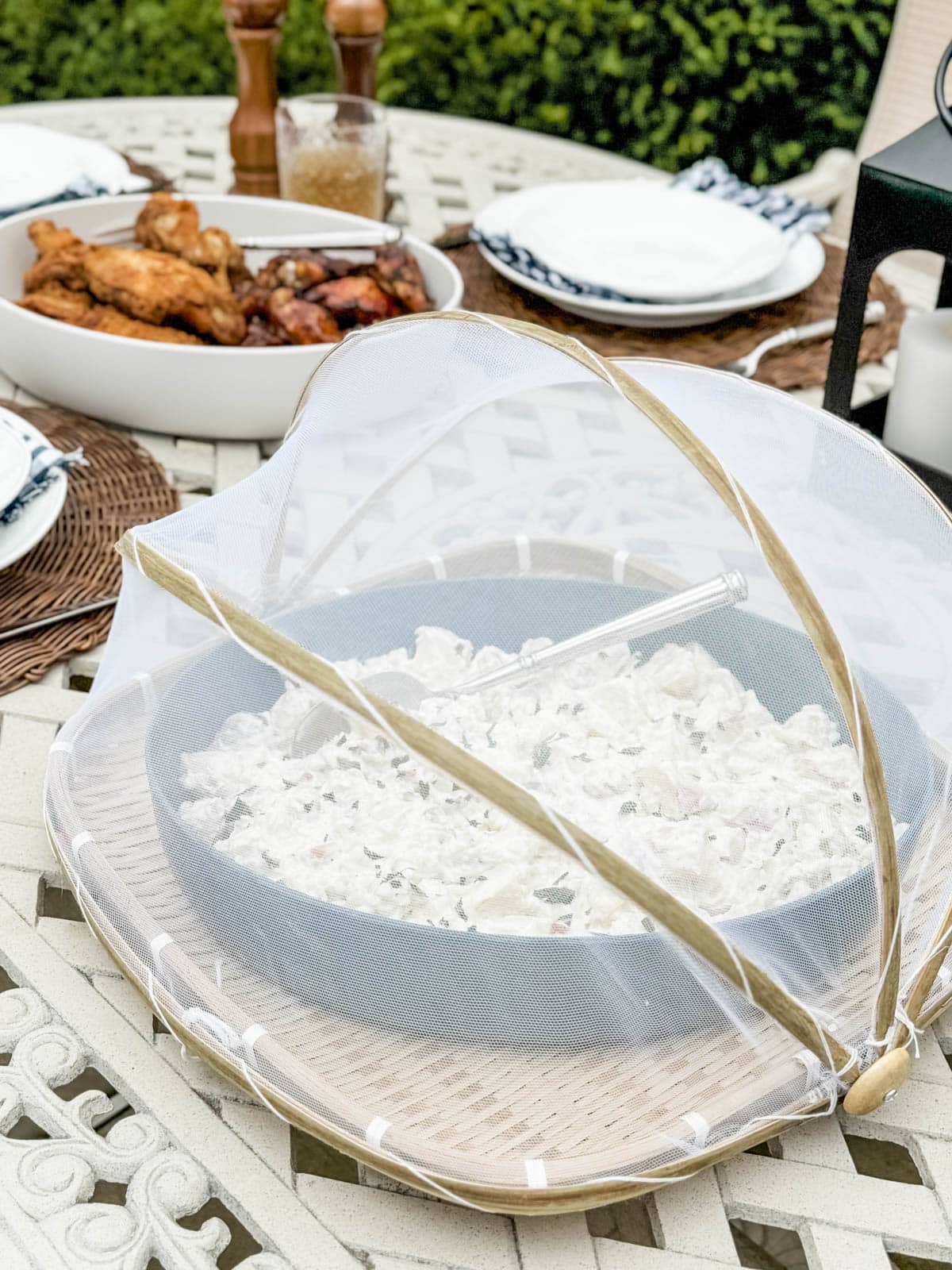
The downside? They're so light that a strong breeze can tip them over. Heavier options like metal mesh food covers and bamboo tent baskets {affiliate links} are more stable if you're dealing with wind. Just keep in mind that these tend to be bulkier to store and don't come in as many size options.
2. Fans
Bugs, especially flies and mosquitoes, generally dislike breezy conditions. Setting up an outdoor oscillating fan is a simple way to keep bugs at bay and keep your guests cool. The constant breeze makes it harder for insects to hang around.
Tabletop fly fans {affiliate link} are a great alternative for smaller areas. I first saw them in action at an outdoor farm market, where they were placed around produce and baked goods. No flies were near the fans, but plenty were buzzing on tables that didn't have them.
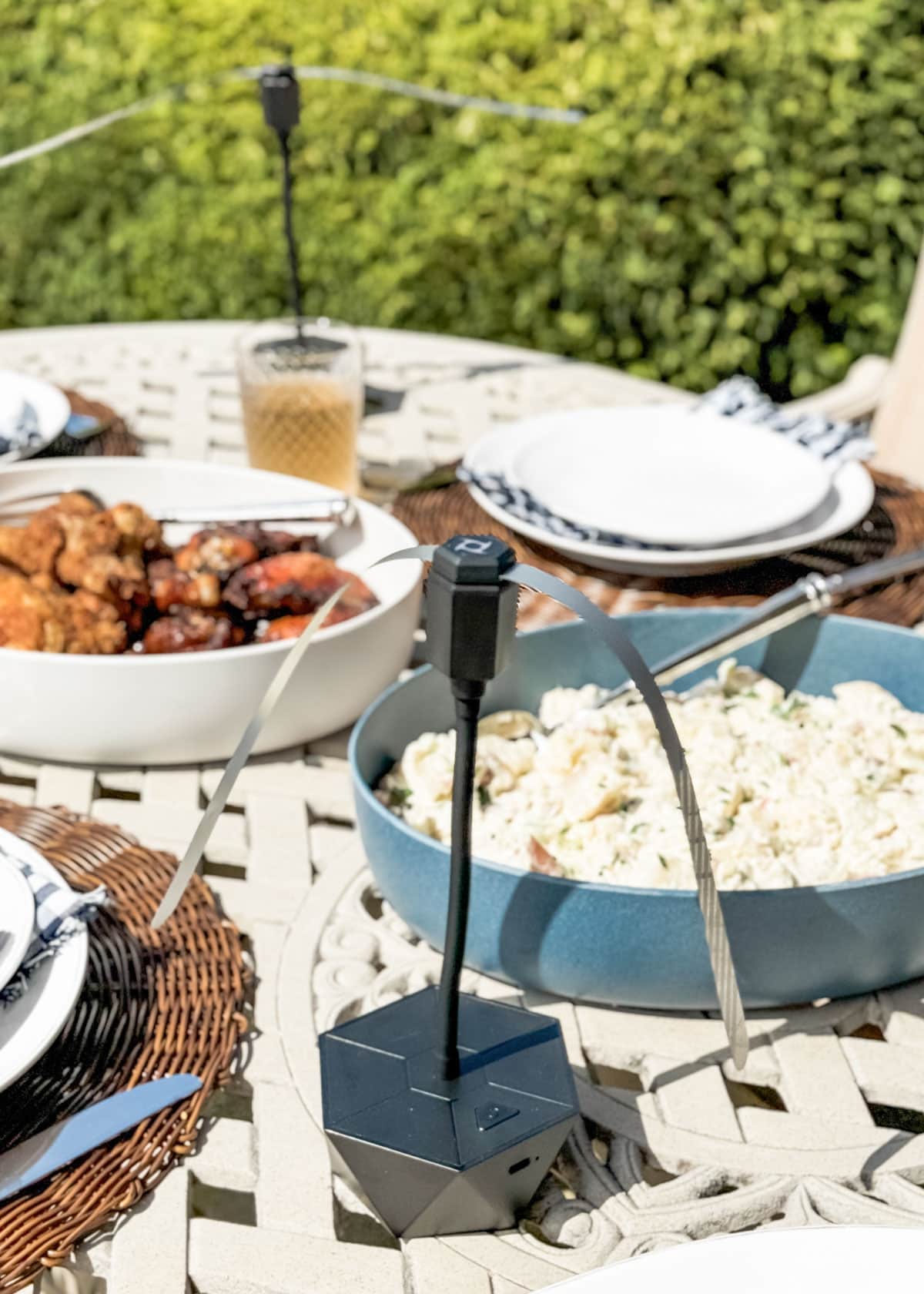
I was impressed enough to order a set for myself when I got home. They've been fantastic for keeping bugs away, especially in my outdoor food prep area.
So, how do these fly fans work? The blades are made of holographic reflective tape. When they spin and catch the light, the reflection confuses flies, making them steer clear.
The fans I use (linked above) stop immediately if touched, don't have sharp edges, and spin slowly enough that there's no risk of injury if bumped into. I even tested them against my long hair-no tangles or mishaps!
3. Natural Repellents
Citronella is a popular go-to for natural bug repellents, but its effectiveness is debated. The oil masks scents that attract mosquitoes and other flying insects, but it often only works in close range and for short periods.
Some studies show that citronella can provide mild protection, but it generally isn't as effective as synthetic repellents like DEET. Since my family tends to prefer natural options, we've tried a variety of citronella and essential oil-based candles over the years with mixed results.
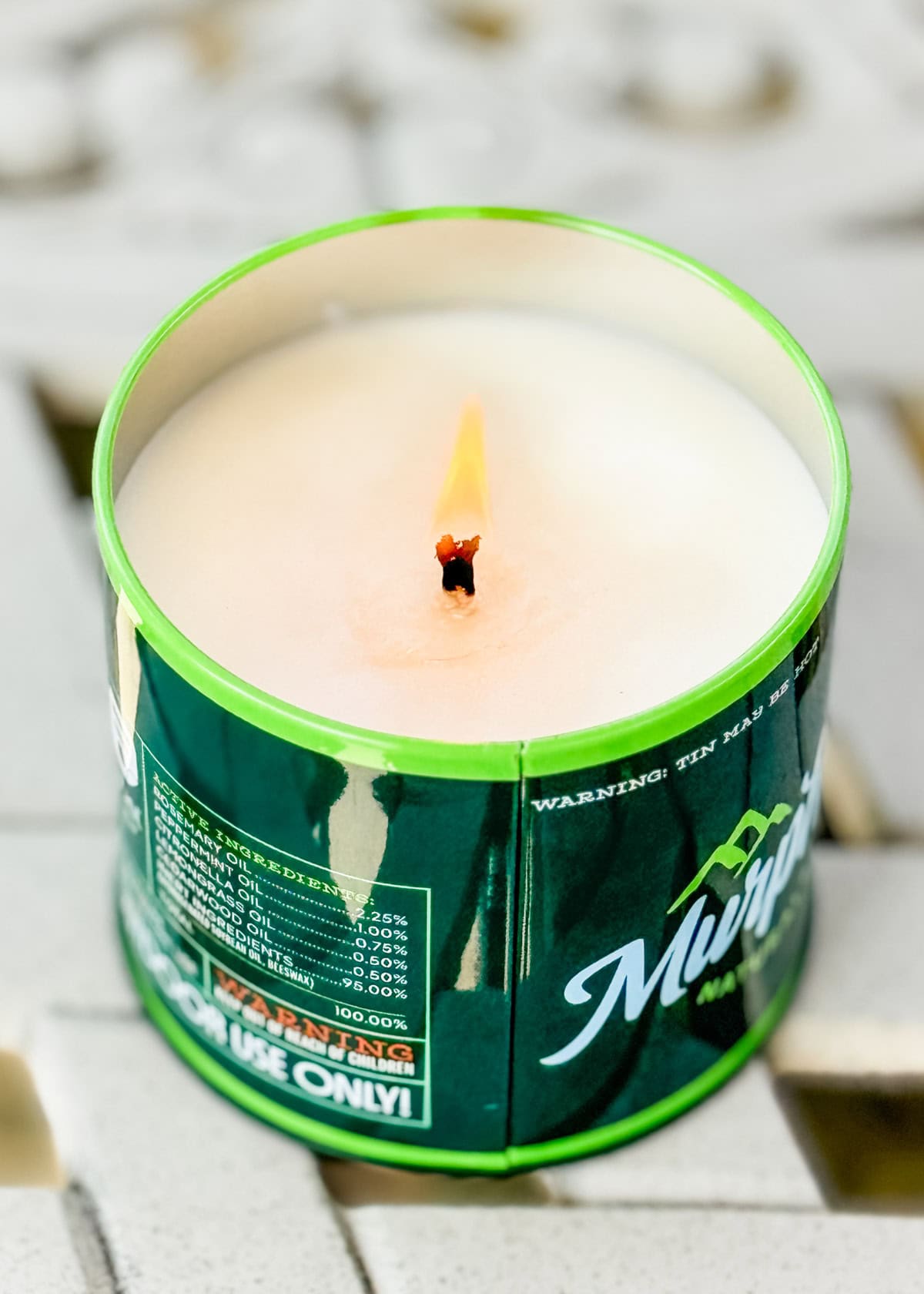
One standout for us is Murphy's Naturals Mosquito Repellent Candle {affiliate link}. This all-natural candle blends citronella, lemongrass, cedarwood, rosemary, and peppermint oils. It has a pleasant scent, and we did find that there were fewer flying insects around our picnic table when it was lit, especially tiny gnats (so annoying!).
In short, citronella-based products can help, but they're just one part of the solution. In my experience, they won't fully keep bugs away, so it's best to manage expectations and pair them with other methods.
4. Mosquito and Flying Insect Traps
Flying insect traps come in various styles from simple bags with lures to electric and solar-powered zappers. We've been using a DynaTrap for the past couple of years, and it has definitely reduced the number of flying pests around our patio.
DynaTrap attracts insects (like mosquitoes, no-see-ums, and beetles) with an LED light, pulling them into a secure basin with a fan. It's a low-maintenance solution, but there are a few things to keep in mind for it to be effective.
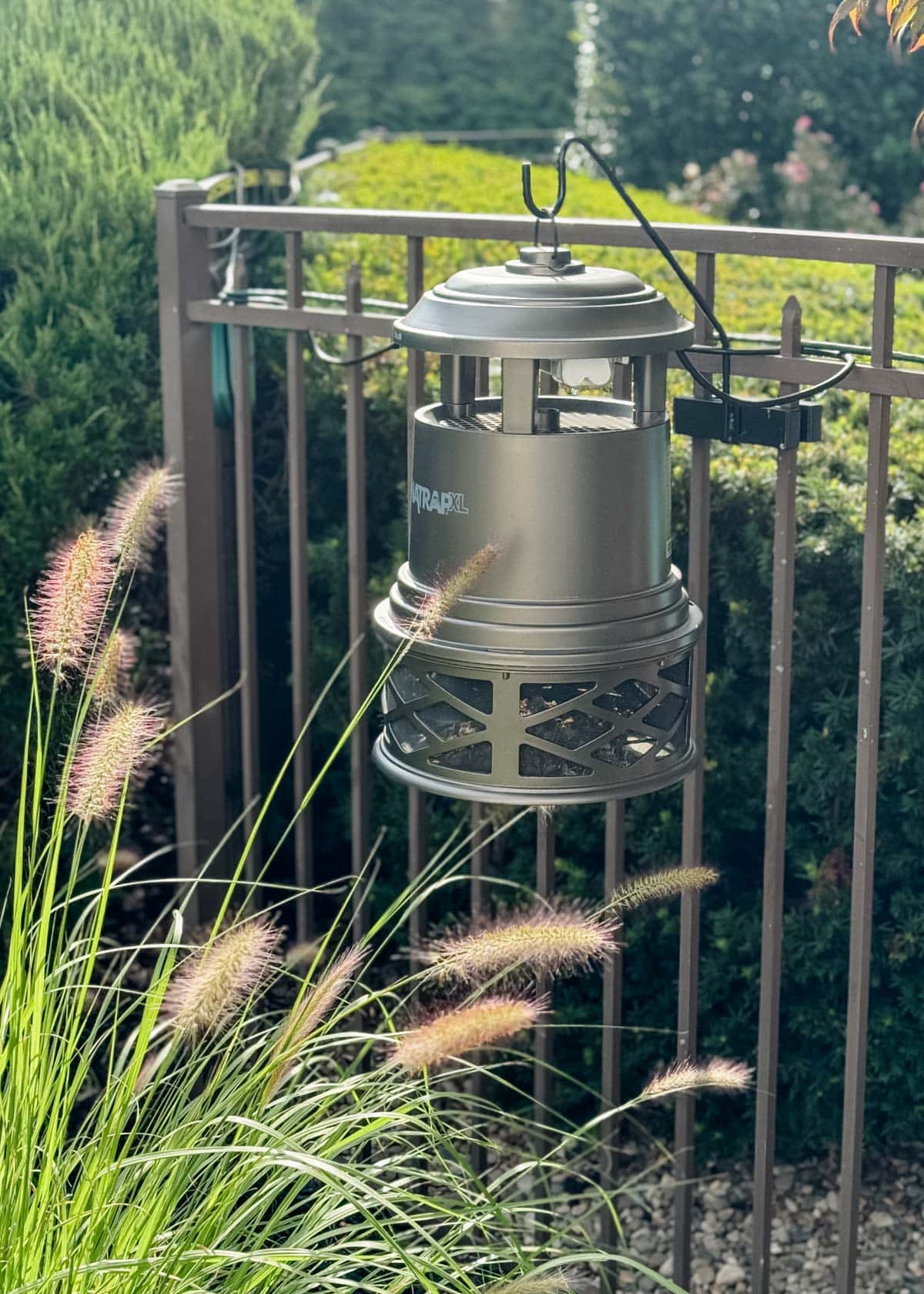
First, choose the right size unit for your space. DynaTrap models cover anywhere from ¼ acre to 1+ acres. Remember that you'll need an electrical source to plug it into.
Second, the DynaTrap system breaks the insect breeding cycle over time and needs to run continuously. I usually start mine in early spring, about a month before we start heading outside regularly. Once it's running, I leave it on all summer and into the fall, turning it off only to clean out the basin or change the bulb. If you set it up mid-summer, you shouldn't expect a mosquito-free zone overnight.
I was initially worried it might trap bumblebees or butterflies, but that hasn't been an issue. I have a vegetable garden and plenty of flowers nearby and haven't noticed any negative impact on pollinators and beneficial insects while the DynaTrap is running.
5. Timing
Golden hour-the gorgeous time just before sunset-sets the perfect backdrop for outdoor entertaining, but it's also when mosquitos can be the most active. If you can, plan your gathering for later in the evening or earlier in the afternoon when their activity is naturally lower.
Bug activity can vary greatly depending on location, climate, and time of year. The tips in this article are based on my personal experiences in the Northeast United States, but your mileage may vary depending on where you live.



Leave a Reply