

Grilling safety begins long before the food hits the flames. From maintaining your equipment to understanding proper grilling techniques, you can help minimize the chances of accidents and injuries when cooking outdoors. In this post, we'll share tips and guidelines to help you maintain a safe grilling environment for an enjoyable backyard barbecue experience.
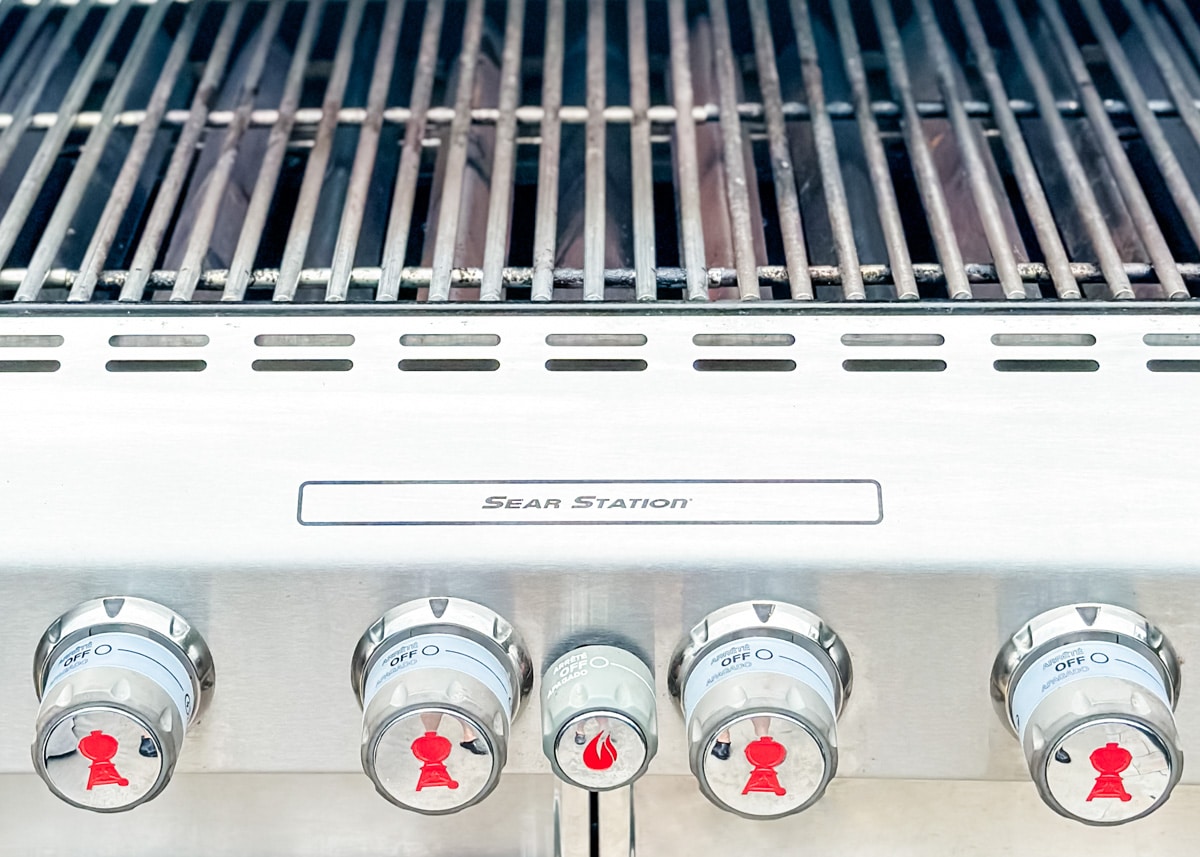
1. Create a Safe Grilling Zone
- Select a well-ventilated outdoor area away from flammable materials (including awnings), landscaping and overhanging branches, and structures that can catch fire. Grills should generally be placed at least 10 feet away from the house, deck rails, garages, and sheds unless otherwise specified by the manufacturer or your community's regulations.
- Place the grill on a stable, level surface and away from foot traffic or areas where children and pets play. Using a grill mat {affiliate link} can protect your patio or deck from grease and stains, making cleanup more manageable.
- Keep a fire extinguisher nearby and familiarize yourself with its operation. (We own an ABC-rated dry chemical fire extinguisher {affiliate link}, suitable for wood, grease, and electrical fires.)
- Never leave a lit grill unattended.
- Tie back long hair and don't wear loose clothing (ex: a top with flowing sleeves) that could ignite over the grill.
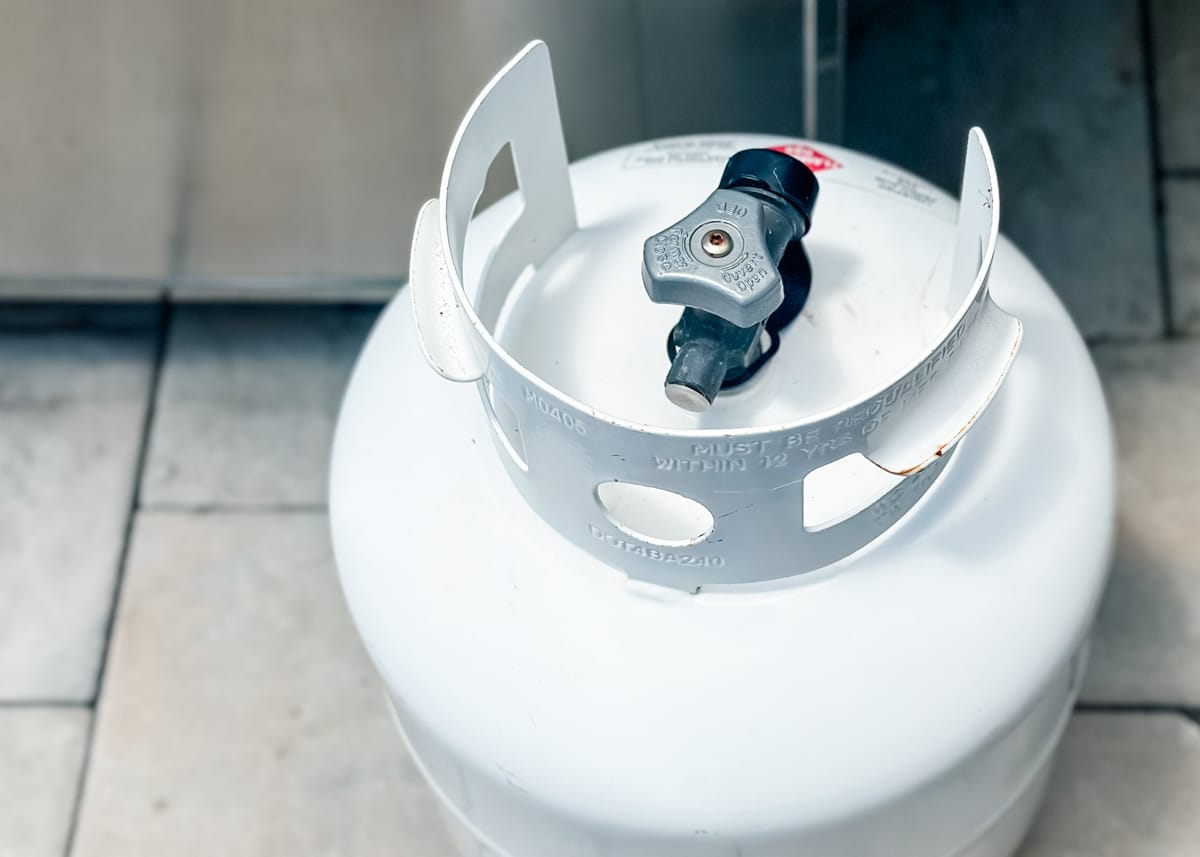
2. Proper Use and Handling of Propane Tanks and Charcoal
- Store propane tanks outdoors in a dry, well-ventilated area, away from direct sunlight and temperatures above 120°F. Keep them upright on a level, non-flammable surface (never upside down or on their sides).
- Never store propane tanks indoors (including the garage or basement) or in confined spaces (such as a garden shed).
- When a propane tank is not in use (even when connected to a grill), turn the valve to the OFF position.
- Inspect propane tanks, hoses, and connectors regularly to ensure that there are no cracks or signs of wear that could lead to gas leaks. You can easily use a soapy water solution to check for leaks. For step-by-step instructions, see: Testing Your Grill For a Gas Leak from Char-Broil.
- Always light a gas grill with the lid open to avoid a build-up of gas that could lead to an explosion.
- Never use gasoline or kerosene to light a charcoal grill. If using charcoal starter fluid, use a small amount and follow the manufacturer's lighting instructions carefully. We prefer to use a Charcoal Chimney Starter {affiliate link} instead.
- Never add charcoal starter fluid to coals that are already burning.
- Once you've finished grilling with charcoal, allow ash and coals to cool completely before disposing of them (this usually takes at least 48 hours). Learn more at How to Dispose and Recycle Charcoal from Char-Broil.

3. Preventing and Controlling Flare-Ups
- Trim excess fat from meats to minimize flare-ups and don't overload the grill with food. Fat dripping onto hot coals or grill grates can cause sudden bursts of flames.
- Be extra mindful of grilling safety if it's windy when you're cooking. The wind can blow the grill's flames and any dripping fat, leading to flare-ups.
- Frequently clean your grill grates and remove any built-up grease or food particles. Grease buildup is a leading cause of flare-ups. We regularly use Weber Grill Grate Cleaner on our stainless steel grates, doing a deeper clean with the Carbona Oven Rack & Grill Cleaner once a season {affiliate links}.
- Regularly inspect and clean the burner tubes on gas grills, ensuring they're free from blockages that can disrupt the gas flow and lead to flare-ups.
- Create separate temperature areas on your grill, such as a high-heat side for searing, and a cooler zone for indirect grilling or keeping food warm. If small flare-ups occur, move the food to the cooler zone to reduce the direct exposure to flames until the flare-up subsides.
- When safe to do so, turn off the burners on a gas grill to help control a flare-up.
- Close the grill lid in case of larger flare-ups or emergencies, cutting off the oxygen supply to the fire.
- Never use water to control a grease fire or flare-up.
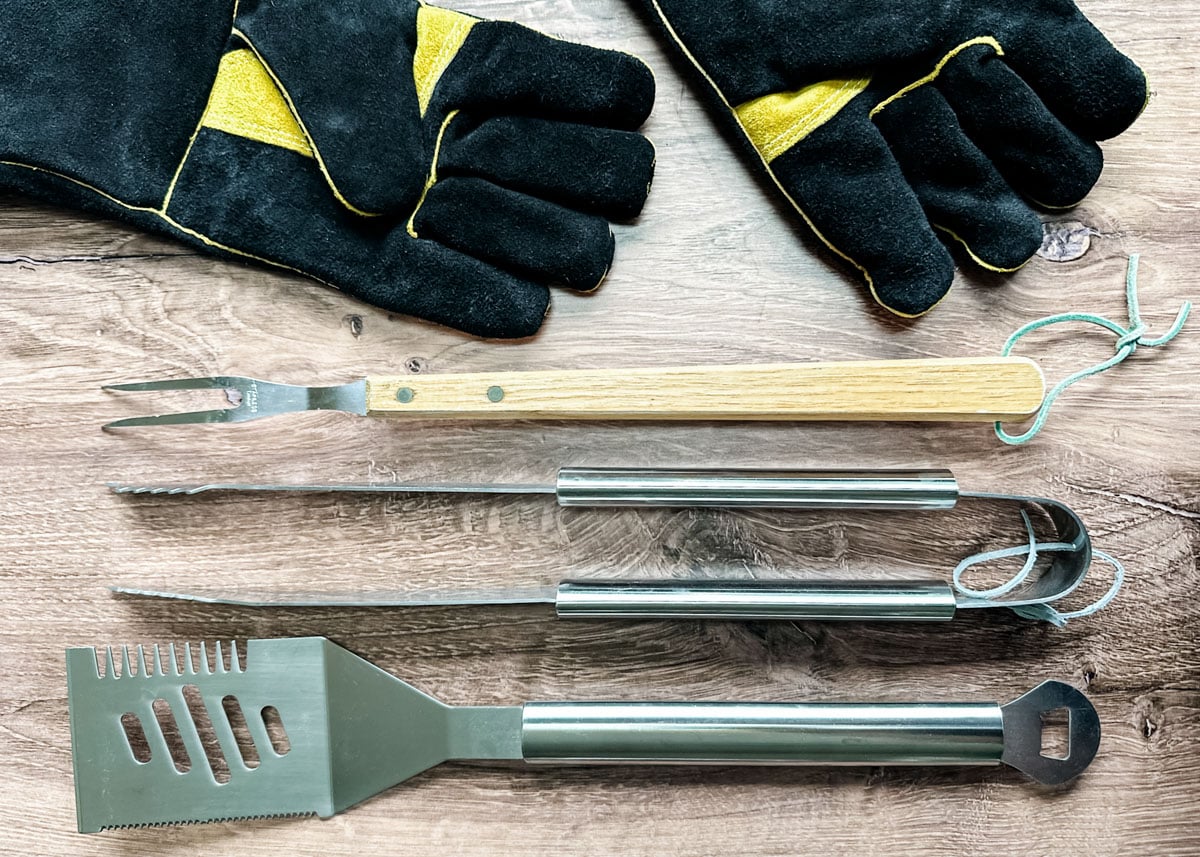
4. Safe Use of Utensils and Accessories
- Long-handled grilling utensils made for high-heat cooking are essential to keep a safe distance from the heat source. Avoid using short or flimsy utensils that can increase the risk of burns.
- Wear high-temp resistant grilling gloves to protect your hands from heat and potential splatters.
- Use a sturdy grill brush to clean the grates before and after cooking, removing any accumulated grease or food particles. We prefer to avoid brushes with metal bristles, which can break off and find their way into food. On our grill, we use the Char Broil SAFER Replaceable Head Nylon Bristle Brush {affiliate link}.
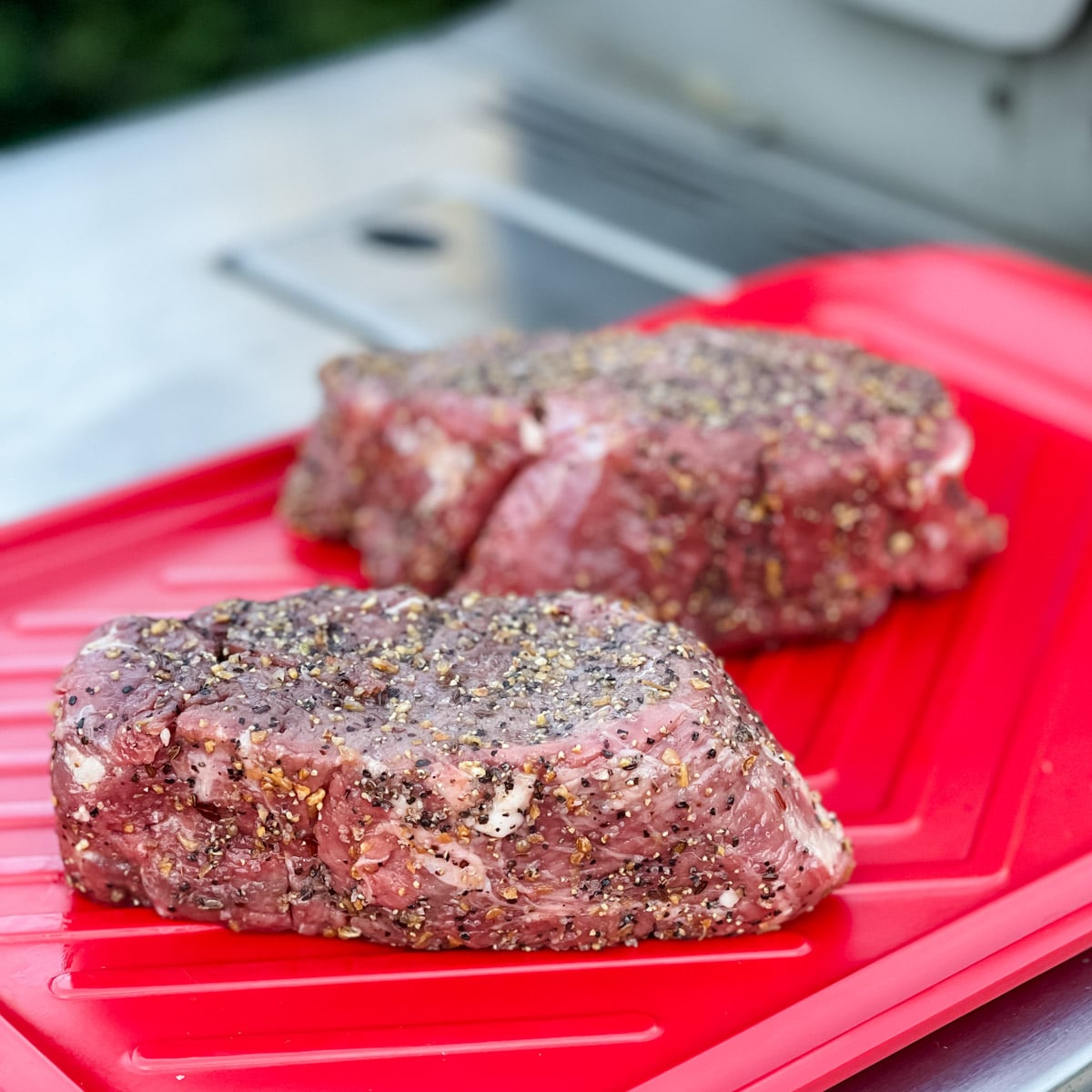
5. Food Handling and Preparation
- To prevent cross-contamination, practice proper food handling techniques, such as keeping raw meats separate from ready-to-eat foods. We like to use color-coded melamine trays {affiliate link}--red for raw meats and seafood, and black for cooked foods.
- Use an instant-read thermometer to ensure meat and seafood reaches the appropriate internal temperature for safe consumption.
- Marinate foods in the refrigerator, not on the counter, to prevent bacterial growth. Keep them covered in the fridge so that they don't contaminate other foods.
Disclaimer: The grilling safety tips shared in this article are general best practices for outdoor cooking and are not exhaustive. Always follow the manufacturer's guidelines for using and maintaining your specific outdoor cooking equipment, as well as your community's regulations.



Leave a Reply