
Interested in adding a freestanding griddle to your outdoor cooking space but can't decide which one to buy? In this post, we'll talk about the different types of flat top grills available, our experiences with the two griddles we own, and how to choose the one that's right for you.

Why Buy a Freestanding Griddle?
Freestanding griddles are a great way to add versatility to your outdoor cooking space. Their flat cooking surface allows for even cooking (without food falling through grill grates), allowing you to expand the types of foods you can cook outdoors.
With your flat top grill, you can make perfect pancakes, omelettes, and crispy hash browns for the whole family. Easily turn out smash burgers, stir fries, fajita fixings, panini, desserts, and more, whether you're cooking for a few or a crowd.
You'll find a lot of griddles on the market, from almost all of the major grill manufacturers (Blackstone, Camp Chef, Pit Boss, Weber, and LoCo, to name a few). Ever since we started sharing videos cooking on our Blackstone griddles on social media in 2021, we got a lot of messages from readers asking which griddles we recommend buying.
The answer is, "it depends." Just like any appliance, the right one for you and your family will depend on your lifestyle and cooking preferences. Here are a few key areas you should consider when shopping for a flat top grill:
1. What Size Griddle Do I Need?
The first thing you want to think about is the amount of space you have, how many people you'd like to be able to cook for, and whether you want to take the griddle on the road with you.
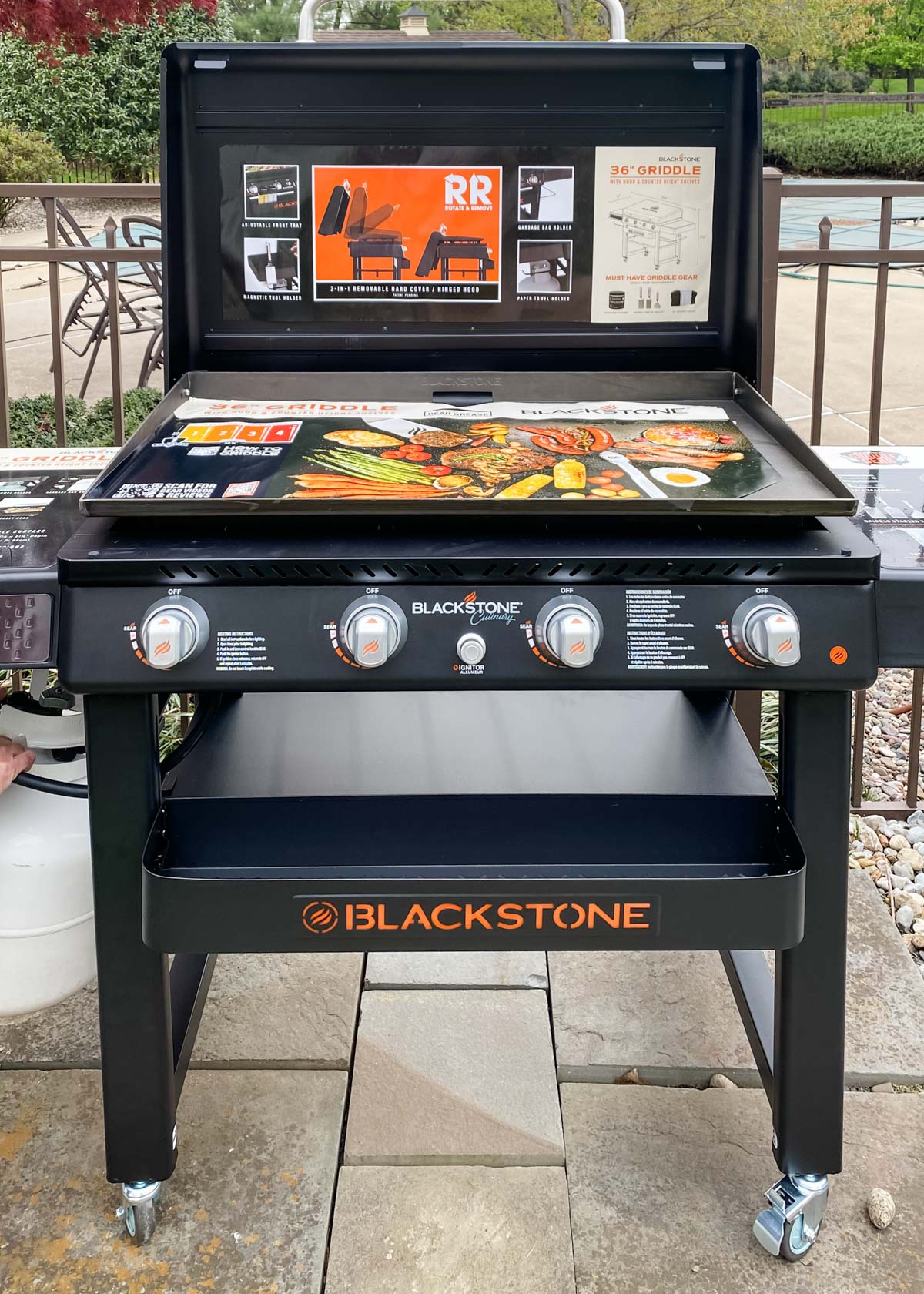
We own two Blackstone Griddles: a 36-inch from their Culinary line, and a portable 22-inch Adventure Ready (the "Little Griddle" as we call it) that's small enough to go just about anywhere. At home, we use the Little Griddle for smaller or supplemental cooks. Sometimes, we just want to make a single smash burger, or have the big griddle filled with food and want to keep something warm.
If portability isn't a factor for you, we recommend buying the largest cooking surface that your outdoor space and budget will allow. Typically, larger cooking areas equal more burners, higher total BTUs (British Thermal Units), and greater flexibility in controlling the griddle's temperature.

Zone Cooking Capabilities
We like to "zone cook" on our grills, allowing us to cook different types of foods at the same time. For example, we might turn up the heat on one side of the griddle to sear and sauté, while we lower the heat on the other side to cook foods needing lower temps, or keep them warm for serving.
Our 36-inch Blackstone is a 4-burner model, while our 22-inch has 2 burners. Both griddles are capable of zone cooking. A larger flat top with more independent burner controls means more options for regulating cooking temperatures.
When we bought the 36-inch, I wondered if it was overkill since we're usually cooking for 2-3 people. It hasn't been, and I've never regretted the purchase.
For us, the larger cooking surface means flexibility. If we want to use only half of the burners, we can, or we can fire up the whole griddle for a bigger cook. (Though, I have to say, when we're making a diner-style breakfast or a full dinner with sides, we almost always end up using the entire surface for zone cooking.)
Top SIZE considerations: Space, Portability needs, Budget
2. What is the Cooking Surface Made Of?
Most freestanding griddle tops are made of a.) hot or cold rolled steel or b.) nonstick ceramic. (You'll find that many built-in griddles, like the Blaze models, are made of stainless steel.)
Rolled Steel Griddles
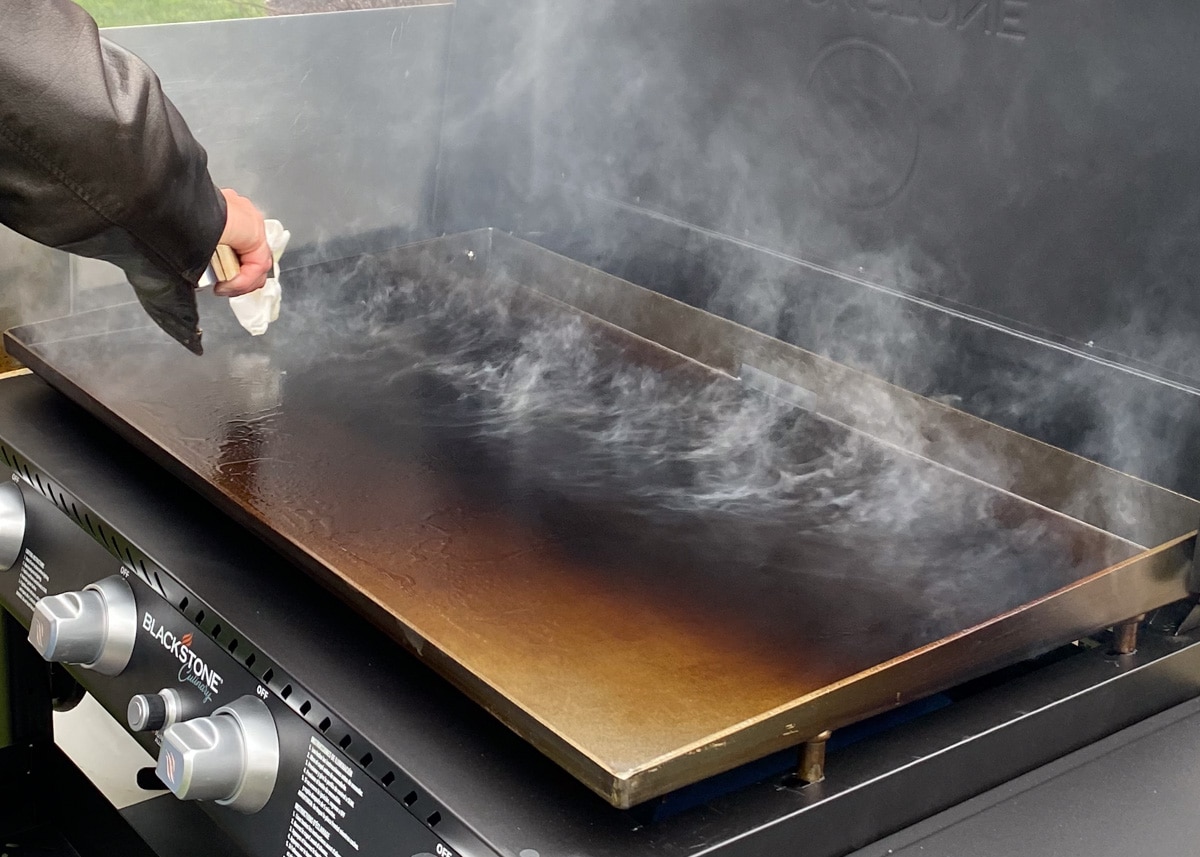
Both of our Blackstone griddles have cold rolled steel cooking surfaces. We like that this material heats up fast, is easy to regulate, is durable with proper care, and allows for the use of metal cooking utensils.
When you buy a rolled steel griddle, you might need to season it before you start cooking. Blackstone's steel griddles, for example, don't come pre-seasoned from the factory, while Camp Chef's do. Seasoning isn't difficult, but it does take an hour or more to get it done properly for a nonstick surface that will last.
The layers of seasoning also need to be maintained with a thin layer of oil between cooks to reduce the possibility of rusting. Like a cast iron pan, the more you cook on a well-maintained rolled steel griddle, the better and more nonstick it becomes.
Want to learn more? Check out Hot Rolled Vs. Cold Rolled Steel from Reliance Foundry to read about the differences between these types of steel.
Nonstick Ceramic Coated Griddles
Nonstick ceramic griddle surfaces, such as the Pit Boss Ultimate 4-Burner Lift-Off Griddle {affiliate link}, are ready to go right out of the box. They don't require seasoning when you get them home and are advertised to be less prone to rusting with proper use. Owners have told us that they're easy to clean after cooking with water and a plastic scraper.
The drawback here is that it is not recommended to use metal utensils (spatulas, etc.) on nonstick ceramic, which can scratch and chip the surface. Silicone, wood, and nylon tools are preferred.
Top SURFACE considerations: Maintenance, Heat Distribution, Type of Cooking Tools
3. What Kind of Fuel Does the Griddle Use?
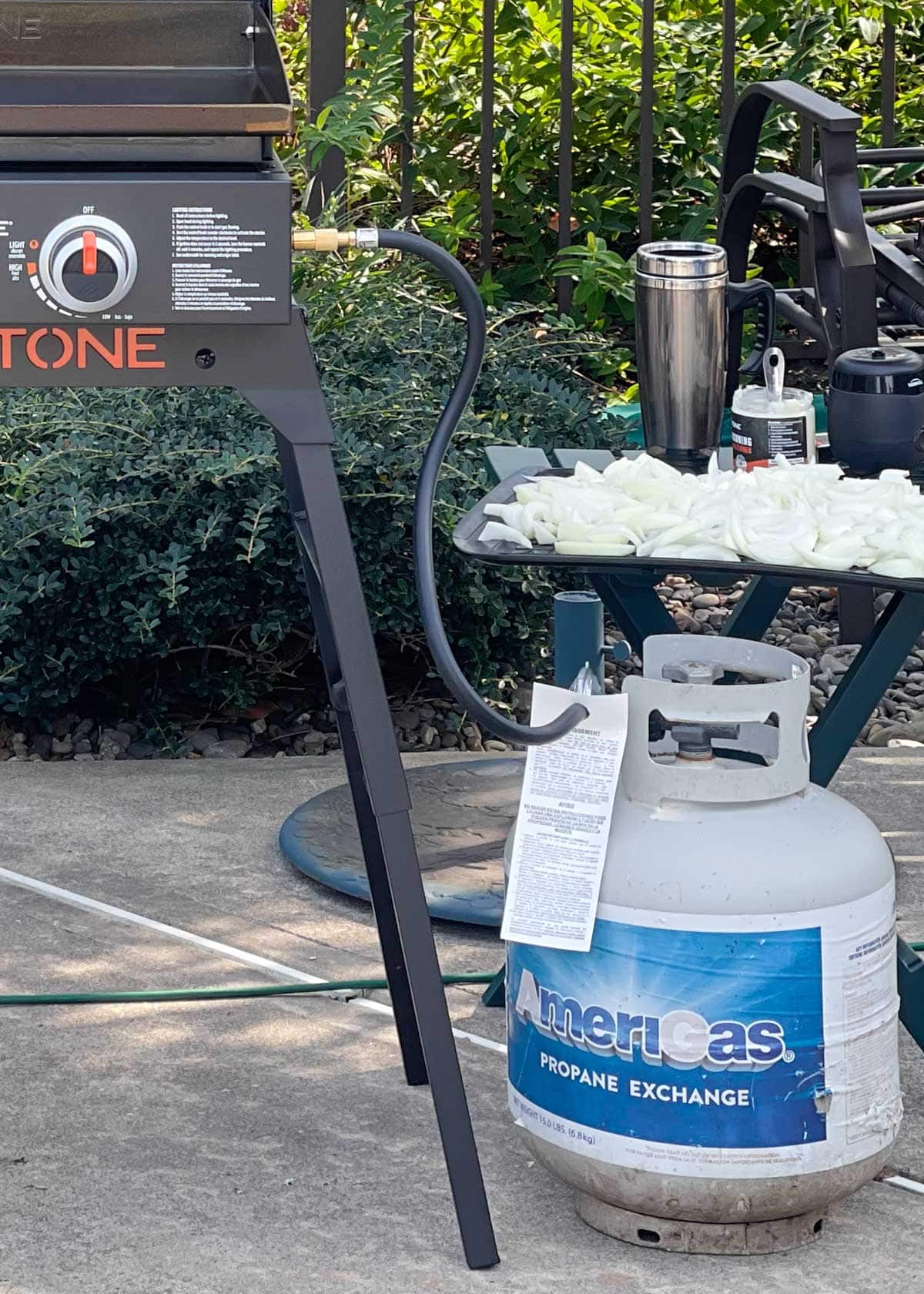
You'll find that most freestanding gas griddles run on propane tanks. Our 36-inch Blackstone uses a 20-pound propane tank. The Adventure Ready griddle takes either a 1-pound propane cylinder or the 20-pound tank, using an adapter hose {affiliate link}.
We get about 1-2 hours of cook time out of a 1-pound tank on the smaller griddle and 7-8 hours out of the 20-pound tank on the big griddle.
Some, but not all, griddles offer a Propane to Natural Gas Conversion Kit {affiliate link} for a natural gas hookup. If you're planning to use the griddle with a natural gas line, be sure to confirm that the model you're buying can be converted.
Top FUEL considerations: Propane vs. Natural Gas Conversion, Cooking Time.
4. How is the Freestanding Griddle Constructed?
A few construction features to consider when buying a freestanding griddle are the availability of a hood, the size and location of the grease management system, and the griddle's cart/stand.
Griddle Hoods
Not all griddle models come with a built-in hood or hard cover. For us, they're essential because they help protect the griddle surface from moisture, dirt, and debris outdoors.
Both of our Blackstone griddles came with hoods. They've definitely helped to keep the cooking surfaces in great shape over several years of outdoor exposure.
If your model doesn't have a hood, you can often add one as an accessory. Blackstone, for example, makes a Hard Top Lid with Handles {affiliate link} that you can place over the griddle.
Grease Management
Your flat top grill will come with a built-in grease trap to catch excess oil and cooking debris. Depending on the manufacturer and model, this can be set up in a few different ways.
Some griddles have a channeled lip on the front of the cooking surface that directs grease to a removable cup on the front or side. Others have a small hole or opening on the front, back, or side of the griddle surface that allows grease to drain into the cup.
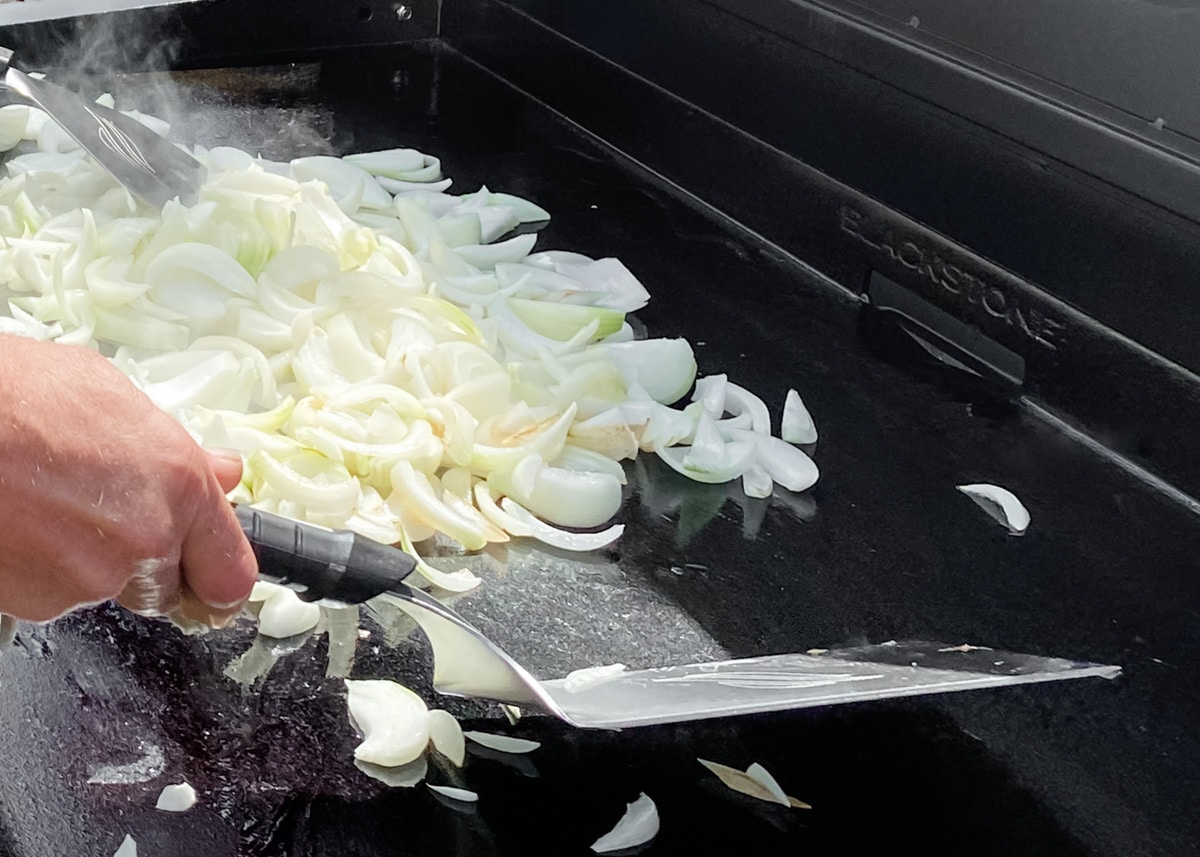
When shopping for a griddle, consider the size and location of the grease management system. A larger capacity cup (often found with rear traps) allows for longer and larger cooks without worrying about overflow.
With a rear grease management system, you'll push the grease away from you while cooking and cleaning. With a front system, you'll push the grease toward you. Which location is better is a matter of personal preference.
Both of our griddles have the grease cup at the back of the griddle. We prefer this location since it's out of the way (less likely for small pieces of food to fall into it while cooking) and the cup is fairly large.

The Griddle Stand
Most freestanding griddles come with front and/or side shelves (sometimes, foldable) or tables attached for additional workspace. These shelves are handy for holding ingredients, utensils, squirt bottles, and other accessories when you're cooking.

Tool hooks and magnetic holders for griddle utensils are also a great feature that we find ourselves using often. Having a designated spot to hang spatulas and tongs keeps them within reach while cooking and keeps the space organized.
Think also about your storage needs between cooks when you're looking at the griddle stand. Some have built in cabinetry with doors or drawers for storing your tools and accessories out of the elements.
We were fine with our big griddle's open cart since we have a standalone cabinet in our cooking area. If we didn't, we probably would have gone for a cabinet model to keep everything in one place.
Top Construction considerations: hard cover availability, size and location of grease trap, Cart/stand features.
5. Extra Cooking Features
Some griddle models offer extras, such as a built in air fryer, deep fryer, or range burners for an expanded outdoor cooking experience. You can also find combo models that allow you to cook on traditional grill grates and the flat top griddle surface in one unit.
Think about your needs in your cooking space and the types of cooking you want to do outside. Remember that some features, like an air fryer fan, aren't powered by propane and will need access to electricity to work.
Top extra considerations: built-in cooking features, such as air fryers, deep fryers, and range burners
More Griddle Guides
Note: While this post includes photos of the two Blackstone griddles we own, we are not affiliated with Blackstone Products. We purchased our griddles independently, and all opinions expressed are from our personal experiences. Affiliate Links are through the Amazon Associates program.
Leave a Reply